Showing posts with label history. Show all posts

Wednesday, August 09, 2017

What we were doing in the 80's (VLBI)

Arthur Niell, Marshall Cohen, David Rogstad, and Martin Ewing, ca 1982

See full photo album.

PDP-11s were hot.  Helical scan video recording was just the thing for recording high-speed radio interferometer (VLBI) data.  In a Caltech-JPL collaboration, we built what was then the largest correlator to process data streams from up to 5 telescopes at once -- providing correlations (fringes) between all 10 pairs.   Getting any fringes at all required delicate synchronization of the telescopes (Loran C timing and Hydrogen maser frequency standards).  Geometric corrections were tricky, too. You had to know the baselines between telescopes accurately, giving the delay and doppler frequency offsets.   To manage all this, we had MSI-TTL logic, core memories, a PDP-11/40, and Forth software.  The hardest part -- keeping those tape machines running!  They were modified IVC and Ampex helical scan recorders, semi-professional.  A later version of the system used standard consumer VHS recorders, which were just becoming available.

One bit sampling was the choice for best signal-to-noise ratio on a broadband "continuum" radio source.

All this came to light again when I started digging into some old files.

When all else fails...


My Keuffel & Esser Decilon 10, model 68-1100 slide rule.  There are lots of K&E sites. For example, this one.

Sunday, July 20, 2014

ARRL 100: Report from Hartford


The first 100 years of Amateur Radio (and the American Radio Relay League - ARRL) is now history. The National Centennial Convention closed that chapter yesterday in Hartford CT. The second chapter is slowly opening.

The League put on a great conference in the Connecticut Convention Center; a fine venue in an interesting city. If you hiked around the newly developed riverfront, you would come to the the Old State House and a lively street scene. Great food and music!

There is an occupational hazard in ham radio and the ARRL. We sometimes focus too much on how we got here – our 100 year history – and not so much on where we are going. A lot of us are old-timers with nostalgic thoughts about how we got into the hobby long ago, our first rigs, the controversies along the way, "Rotten QRM" and so on.

Conference presentations did try to look ahead. Craig Fugate KK4INZ, FEMA Administrator, gave a compelling view of Amateur Radio as a vital backup emergency service "when all else fails". The challenge is to go back to the future – to be sure you can communicate when the public telephone and data networks are completely off-line. High technology comm. systems have proven to be surprisingly brittle, just when you need them most. It was amazing to receive that kind of endorsement, personal and professional, from a high place in government.

Joe Taylor K1JT gave another keynote talk that was billed as future-oriented. Joe is a friend who is well-known as the driving force behind the WSJT weak signal communications software, a physicist and astronomer, a regular guy, and, yes, a Nobel Laureate. Even K1JT's "futures" talk was heavily biographical and historical, describing a moving personal journey that brought the audience to its feet.

Both Fugate and Taylor were given well-deserved ARRL Medals of Honor.

Futures? I found the forum talk by Frank Lloyd AA7BQ to be the most challenging. Frank is the guy behind QRZ.com, the well known callsign database and forum site. From humble beginnings redistributing the early FCC tape-based callsign data, QRZ has grown into a leading edge cloud-based Internet service, with a staff of 4 or 5 people. The site claims to be the number one Amateur Radio web site.

QRZ.com's basic service is free, but it has a number of subscription services at prices $20 per year and up. The latest is an on-line logbook service and accompanying award program. The front-end website for logging and log analysis looks quite appealing. I expect it will be a serious competitor with other on-line services like LoTW and eQSL.

What might that mean for ARRL's future? ARRL still needs to continue to reinvent itself for the Internet era. Increasingly, ARRL's identity will (and should) be as an Internet service provider – in addition to the traditional member service, technical, and regulatory roles. The League does have its big website (with lots of good content, but lots of problems, and only a weak forum system) and the LoTW program. LoTW is widely considered to be security-heavy and user-unfriendly, aimed at qualifying for ARRL awards, but having little "social media" orientation. All that said, it does serve an important role!

http://www.arrl.org/arrl-second-century-campaign
One of the problems for ARRL is finding a new revenue model to support an aggressive Internet program. The $39 dues are amazingly low, given all the services that are supported not to mention QST. Many hams are happy to pay another $39 or more to QRZ.com or similar services. That should be sending a message to the League.

Transitioning to digital publications is hard for any print publisher, but it is necessary. Digital QST is a first step, but it still has too many limitations that come from the print world. Where is Digital QEX – and other kinds of digital newsletters or forums on special topics?

That's the big challenge. The League has to stay relevant on the Internet! Oh, and on the bands, too. :-)


Wednesday, November 21, 2012

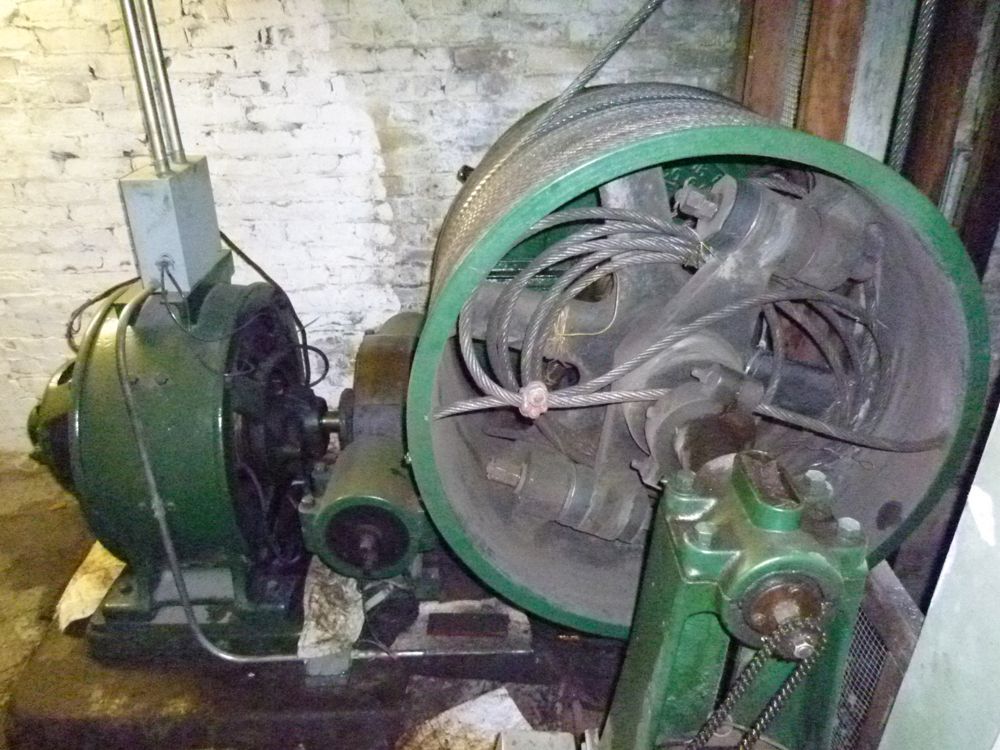
DC power grid still runs in San Francisco

DC Elevator Motor
Fascinating bit of techno-history persisting in the modern day.

http://spectrum.ieee.org/energy/the-smarter-grid/san-franciscos-secret-dc-grid .
In the early days (ca 1920) some hams could run their radios with the "B+" (plate voltage) coming straight from the DC power mains, saving money on expensive power supplies.  But if you needed high voltage for your transmitter's final, you might have needed a motor-generator (dynamotor). That would have been a big expense compared with an AC transformer/rectifier.

Thursday, May 24, 2012

QST & digital QST


The new digital QST edition is now on the web, accessible to ARRL members.  It's a good effort -- at least if you like the new web magazine reading experience.   It is being provided to members as a no-extra-cost addition to the traditional print version.

I hope the pdf version won't go away completely.  That's the format that appears on the annual publications CDROM and on the QST web archives up through 2011. The new format is fine (well, if you like it!) for on-line reading and limited off-line reading, too, but it is a proprietary and DRM-restricted format that probably won't be convenient (if readable at all) 50 years from now.

I was interested in the new QST logos that are cropping up.  There are several variations. One is at the top of this post (I understand it is for the iOS app), and here is another:


But I like to look through the QST archives to how QST presented itself in the very earliest days.  The first "logo", from 1915, was this neoclassical marvel:


Then, in the late teens and into the twenties, you might have seen this one.  (Color added.)


This is the classical logo for me.  Its block lettering and at least some of the lightning bolts continue into the modern era.  The slogan now says "Amateur Radio" instead of "the Wireless Amateur".  I like this old graphic, but I'm pleased that there is so much continuity in today's version.

Finally, take a look at the first digital QST cover (June, 2012):


Bold and hyperactive design, and presented twice for good measure!

Friday, November 04, 2011

Hackers I have known

I've just finished "Hackers: Heroes of the Computer Revolution" by Steven Levy.  Originally published in 1984, the book chronicles the early days of computing, when giants strode the earth... It is out in a 25th anniversary edition.

Naturally, and without too much shame, I read it on the Kindle. (If you haven't read the book, see below to appreciate the situation.)

I suppose, by Levy's account, I was on the fringe of the second generation of hackers.  (or maybe generation 1.5)  I crossed paths with a couple of the figures mentioned in the book.  Unknowingly, there may have been more who I never met by name, but who inhabited the same spaces I did.

Bldg 26 -- It never looked this good!
I was a graduate student at MIT from 1966 to 1971, working in Building 26, the Compton Lab. (Levy has unkind words for grad students who were always trying to get things done with the computers, as opposed to the hackers who were building a little utopia around neat code and the "hacker's ethic".  But I will let that pass.)

I began my career at MIT with a couple of computing projects. (I was a physics student working in radio astronomy, but computers have always been central in my world.)  First, a re-reduction of Prof. Bernard Burke's 234 MHz Sky Survey data, which I inherited from other hands.  That project never really finished, and for all I know, someone is still working on it!  It was a great chance to learn the ropes of "glass house" computing, using the IBM 7094 system on the first floor.  It was a true glass house, having magnificent viewing windows from the first floor corridor.  This was a batch system, using punched cards and magnetic tape for input.  You waited hours for a print-out to come back.  A second 7094 system in the same room hosted the CTSS timesharing system, but that was too expensive and not quite powerful enough for my project.  This was all using the new Fortran IV language.

My more respectable work (in hackers' terms) was in connection with a later project, where we had to analyze radiometer data collected on punched paper tape.  We were setting up to measure the "3 degree" cosmic background radiation.  This analysis really needed an interactive analysis, where we could edit and calibrate the data with successive refinements.

So I was introduced to the DEC PDP-1 computer on the second floor.  It was the late 60's, and I was largely unaware of the glorious history of that system and its earlier sister machine, the TX-0 in the next room.  Levy's book fills in a lot of details for me.

MIT PDP-1
The PDP-1 had been expanded to a small timesharing system, supporting 4 terminals.  There was an early graphics display that you addressed in a very simple way: set X, set Y, beam on, beam off -- as I recall.  No driver software! We used a software system called "Stargazer" developed by Eric Jensen. I presume he was the same person mentioned by Levy as "Jensen".  I remember him as an affable but maybe quirky fellow, who had another passion as a comic diver at the MIT pool.

The PDP-1 was a wonderful system, everything was assembler code (of course!) with some exotic peripherals for the time.  A Calcomp plotter (which we used one year to make individualized snowflake Christmas cards) and a nice sound system that played a respectable "Eine Kleine Nachtsmusik" in 4 part harmony, IIRC.  I remember one day when the engineers wheeled in a new electronics crate.  They took the system down for a time, and then lo we had a new "index register" in our instruction set.  Magic.

Several years later, probably about 1969, I needed to make photographs of pulsar data -- time vs frequency for pulses dispersed by the interstellar medium. It turned out that the ancient (by that time) TX-0 computer had a magnetic tape drive and a suitable display and camera.  It was easy to get time there, since most of the action revolved around the PDP-1.

MIT TX-0
The TX-0 was truly amazing.  It had the power (maybe) of an Apple II, but it was built on a large collection of relay racks spread around a good sized room.  It was said to be the first computer to have used transistor-driven magnetic core memory.  (Levy goes into the history of this machine, but does not dwell on its technology.)  One feature stood out in particular.  It was a wonderful thing to turn the system "on".  It was not simple.  You turned on power, but then you had to start the processor clock.  The clock consisted of a sequence of variable delay lines connected in series and then wrapped around to make a loop.  (Several clock phases were needed to sequence the logic correctly.)  You had to wait until the electronic delays were stabilized (they were probably vacuum tube devices).  Then you pressed the "start" button that injected exactly one short pulse into the loop that started everything going.  It's safe to say I've had a higher interest in power-on sequencing since those days.

We got advice and help from John McKenzie, who was the support engineer for the TX-0 mentioned in Hackers.  I remember him as gracious, supportive and tolerant with us newbie students.  I would put him alongside D. Cosmo Papa, Jack Barrett, and a number of other engineers and technicians who really kept MIT and MIT students running right in those days.

Today's open-source software movement is a direct descendant of the original hacker generation.  Many of the early struggles still resonate.  "Information wants to be free."  Aggressive efforts to impose overbearing intellectual property rules and DRM (digital rights management) really need to be opposed.  Maybe we aren't seeking a free information utopia, but we do need to understand that creative expression (and programming) are always built on the foundation of earlier works.  Mickey Mouse can't be "owned" forever.

It may be that a true hacker would never be caught dead with the DRM-heavy Kindle, but some of us have mellowed at least a little.

Friday, July 15, 2011

Ham Radio Ecclesiastes

"Is there any thing whereof it may be said, See, this is new? it hath been already of old time, which was before us."  Eccl 1:10.

We often hear complaints about the decline of Amateur Radio in one way or another.  Often people say that we just don't build stuff the way we used to.  Well now, 'twas ever thus!

You can read it yourself in the pages of QST for March, 1916.  That's an article by Lloyd Manuel called "Thoughts of the Good Old Palmy Days".  He's talking about his old-time experiences -- probably ca 1905 -- when men were men and hams had to build their own stuff!

This article is a transcription from the QST archives.  You may be interested to browse through selected portions of early QST at history.aa6e.net.

Friday, December 17, 2010

Ham Radio and Ngram

Google's new service "Ngram" is cool.  It lets you search for any word or phrase through all the books Google has indexed, displaying the count versus year.

Here is the graph for "amateur radio":

and here is the result for "ham radio":

The significance?  Ham radio (in books) didn't start until about 1950! The Ngram view page also gives links for the books in particular year ranges.  I looked up some of them prior to 1965 and found lots that were in the "popular" category: Popular Mechanics, Popular Science, Boy's Life, etc.  Amateur radio, however, has a book record back to 1900 if not before.

Monday, May 31, 2010

Memorial: The Audion


One of the neatest displays at ARRL headquarters is in the W1AW station entry -- a couple of early radios using the DeForest Audion. You have to know where to look for them. The League is many things, but it lacks a real museum curator.

Remember the Audion here. (Gizmodo)

Sunday, May 23, 2010

Weird Words: Wattage, Architect

Some words bother me. Maybe I'm showing my age, I know. But consider.

Wattage - The better word is "power" or "power rating". A 60 Watt light bulb has a 60 Watt power rating. A 10 Watt bulb is a low power bulb.

On the other hand, "wattage" is a parallel of "voltage", and I don't have the same reaction to that word. The "correct" words would be "potential" or "electromotive force".

Then why don't we say "amperage", "ohmage", "faradage", or "henryage"? Actually, I do hear "amperage", but not commonly.

[We seem to have some confusion between a quality (power) and the unit used to measure the quality (the Watt). In economics, there is something similar. The currency system may be called Stirling or RenMinBi, while the unit is the Pound or the Yuan. In the US, alas, we can only say "the Dollar" for both.]

Architect - When did we start using "architect" as a verb? I think I noticed it first in the computing world in the late 1980's. Why isn't "design" good enough? Maybe we IT gurus want to give the impression that we are a cut above traditional engineering professions? (Alas, the opposite is more often true.)

That's all for now from your local curmudgeon shop.

Wednesday, April 21, 2010

Amateurfunk

Amateur Radio in German is "Amateurfunk". That sounds pretty funny to an American ear, since "funk" is a highly-charged word with several meanings, none of them suggesting a radio hobby!

Somehow, through the Internet, I came across the word "der Funke" meaning "spark". And the clouds parted. Radio as spark. That was certainly its origin in the late 1800's. Amateur Spark is a nice thought, now rather anachronistic, but saying something about what makes ham radio what it is.

And where did "radio" come from? Wikipedia to the rescue:
The prefix radio- in the sense of wireless transmission, was first recorded in the word radioconductor, coined by the French physicist Édouard Branly in 1897 and based on the verb to radiate (in Latin "radius" means "spoke of a wheel, beam of light, ray"). "Radio" as a noun is said to have been coined by the advertising expert Waldo Warren (White 1944). This word also appears in a 1907 article by Lee De Forest, was adopted by the United States Navy in 1912 and became common by the time of the first commercial broadcasts in the United States in the 1920s.
I think I like "Funk" better...

Note added: Here's what set off my spiel today, an Economist article quoted by Andrew Sullivan here.

Thursday, March 25, 2010

A Little Look-up

Today, I took some time out from my volunteer gig at the ARRL Laboratory to explore the League's files of Amateur Radio Callbooks that go back to the founding of the hobby -- when giants strode the earth. As far as I know, no one publishes a printed Callbook any more -- there are CD-ROM versions, and the information is available through quite a few online services. The print volumes are great as archives, but unfortunately no one has undertaken the big (!) chore to scan and OCR the volumes for general access. (Hamcall.net will let you look up a callsign for 1960 and a number of the more recent yearly databases.)

Anyway I found the first Callbook instances of my 4 callsigns: K5MXF (1958), WA1OCT (1971), WB6YBQ (1974), and AA6E (1979). Like many old timer hams, I did not keep my early license documents and my memory of exact dates was fuzzy. It's good to have them now.

The League has a great archive, but alas there is no one tasked to retrieve data for members. It might make a good service job for the right volunteer in the Newington area.

Note added: If you try hamcall.net for historical data, you need to be registered (free) and logged in. Go to http://hamcall.net/call, enter the call sign and check the box "Look up this callsign from all available database years".

Thursday, March 11, 2010

A Visit to Cable & Connectors

One of the features of having a volunteer gig at ARRL in Newington, CT, is getting to drop in at this store. To my mind, it's what Radio Shack should have been - a great place to browse for doo-dads for the next building project.

What stopped me in the aisle was an item hanging on the rack - An "11-pin octal socket". A weird concept, that.

You can search for them, too. I also find a listing for 4-pin octals.

Note added: Latin lovers and computer geeks will realize that "octal" means eight. See Wikipedia on tube sockets. I find sockets named "Septar" (7 pin), "Noval" (9 pin), "Decal" (10), and "Duodecal" (12). There was a brief time when engineers still knew some Latin! Now, an 11-pin octal doesn't raise an eyebrow.

Monday, October 12, 2009

My New "Boonton" Model 59 GDO

Here is my big acquisition from the Nutmeg Hamfest this weekend. It is the classic Measurements Corp. Model 59 Megacycle Meter. Some of us would know it as the "Boonton Grid Dip Oscillator." From what I've been reading, a variant of this unit was first produced in World War II. The manual, available here and here on the Internet, bears a 1947 date. The company was sold to Edison in 1953, so this unit was probably produced in the early 1950's. (The meter/power supply unit is serial #750, the oscillator head is #695, the coil set is #734.)

The developer was the well-known engineer Jerry Minter. (See his IEEE.tv interview that prominently shows the Model 59.) His was one of a number of instrumentation companies active in Boonton, N.J. after the War. There was no connection to Hewlett Packard. (An impression I had at one time.)

I used a Model 59 extensively in the 1960's and 70's, but I did not know that it was a classic even then. Now, it's very satisfying to have my own! It is far superior to the Heath GDO and tunnel diode dipper that I have also used. I see one advertised at $75 on E-Bay, but I got mine for about half that.

The grid dip oscillator is a very handy item for generating signals, checking for resonance, and making rough frequency measurements. This one covers the range 2.2 to 420 MHz in 6 bands.

[Click photos for more detailed versions.]

It is necessary to inspect all new equipment here at AA6E. (The unit was in remarkably good condition. It worked the first time and only needed a little cleaning.) This device had wonderful "build quality" -- as we say these days. The important part is the tunable oscillator assembly, which is meant to be hand held. The inner works are all gold plated (!) and very sturdy. A single 955 "Acorn" triode tube is the active element. Lead inductances are kept very low to allow UHF operation.


Dial calibration is meant to be quite good. Each unit's coil set is supposed to be calibrated to work with a specific oscillator head, although my coil set's serial number doesn't match my oscillator. The tuning "feel" is very smooth.


The power supply uses a 5Y3 GT rectifier and an OD3/VR150 voltage regulator tube. The red filaments and the purple regulator discharge, along with the incandescent (!) pilot light, are a treat by themselves. Not shown is the neat wiring harness beneath the power supply chassis.


Now I need to build another RF gadget!

Sunday, January 18, 2009

Ham Radio in Life Magazine

I ran across some Life Magazine photos that are digitized at Google. Right is an example:

Smitty tinkering with his set, during Radio Ham-Operator's Field Day.
Location:US
Date taken:June 1946
Photographer:Walter B. Lane

You can find more at this Google Images link. So, who was Smitty? He has a nice rig there. Check out the dynamotor for the B+ supply!